Italian Radical Design


Italian Radical Design is meant to unsettle you. It was never about comfort, subtlety, or fitting in.
Emerging in Italy in the late 1960s and 70s, Radical Design was a direct rebellion against corporate modernism—an era designers felt had reduced furniture to sterile, efficient, and emotionally vacant objects. Groups like Archizoom, Superstudio, and later brands such as Gufram rejected the idea that design should only serve function or corporate taste. Instead, they treated furniture as provocation, art, and cultural critique.
Think less “perfect living room” and more visual manifesto. Reference points aren’t limited to design history—they bleed into pop culture. From the surreal theatricality echoed in The Godfather’s interiors to the stylized, hyper-symbolic visual language seen in Frank Ocean’s work, Radical Design lives at the intersection of art, music, film, and attitude.
Why Italian Radical Design Matters to Boys Hostel
Italian Radical Design matters to Boys Hostel because it’s embedded in our DNA. It represents what we stand for: contemporary movement, novelty, post-postmodern thinking, and the rejection of safe design choices. Radical Design doesn’t ask to be liked—it demands to be understood. That philosophy mirrors how Boys Hostel approaches furniture, collectibles, and spatial curation. We’re not interested in filling rooms. We’re interested in shaping identity through objects.
Why Italian Radical Design Matters to Everyone Else
Italian Radical Design permanently altered how people perceive furniture and domestic objects. It challenged the assumption that utility must come before expression—and proved that objects could be functional, sculptural, and culturally significant at once.
Many Radical Design pieces now sit comfortably in museums and private collections, not just homes. They retain—and often increase—value over time, making them both investment pieces and sentimental artifacts. More importantly, their radical nature encourages people across generations to detach from disposable trends and instead build spaces rooted in meaning, memory, and individuality. Radical Design teaches restraint through boldness: when one piece says everything, the rest of the room can breathe.
How to Bring Italian Radical Design Into Your Space
The genius of Radical Design is that it has only grown more relevant with time. Here’s how to integrate it into a contemporary interior without turning your home into a showroom:
1: Contrast is key
Pair a Pratone Chair with minimalist furniture and clean white walls. The tension between restraint and rebellion amplifies both. One statement piece per room is usually enough.

A nod to Gufram’s Italian Radical Design legacy — Pop‑art inspired, avant‑garde forms that challenge traditional design conventions
2: Let it anchor the room
A Gufram Cactus or sculptural chair should be the focal point. Build the space around it—don’t treat it as an accessory or afterthought.


Featured In This Image: Bocca Sofa by Gufram (left) & Cactus Coat Rack and Capitello Lounge Chair by Gufram ( right)
3: Mix eras thoughtfully
Radical Design pairs surprisingly well with contemporary streetwear aesthetics and designer collectibles like Bearbrick or KAWS. Both share a lineage of Pop Art, irony, and playful defiance.

Featured In This Image: Bearbrick by Kaws
4: Embrace color unapologetically
These pieces were designed to stand out. The iconic Gufram green or the red of the Bocca sofa shouldn’t be muted or “balanced.” Let them dominate. That’s the point.

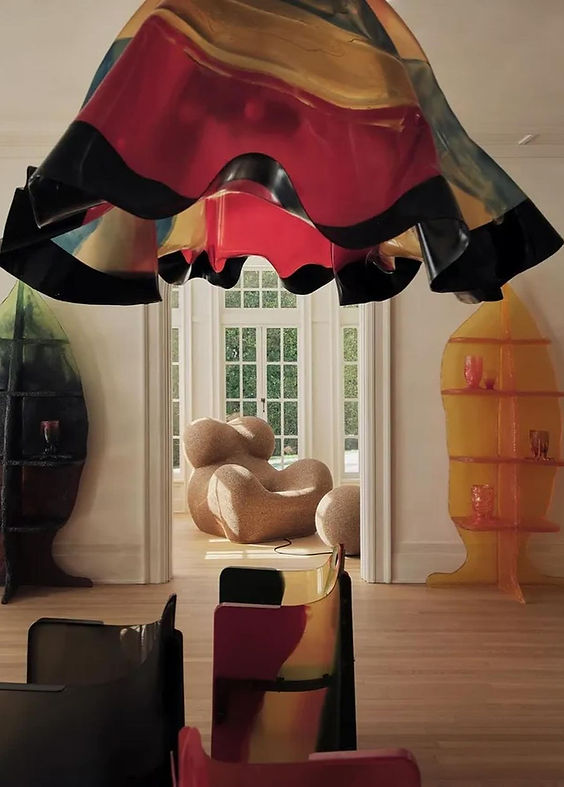
Featured In This Image: Superonda By Archizoom (left) & Gaetanon Pesce Dear Future Project(right)

